Kubernetes at 4: The worlds next most dominant technology?
How Google is using their Android playbook to win the cloud market with Kubernetes
This month has marked the 20 year birthday of the search giant Google, and the 10 year birthday of it’s most successful offspring — the mobile operating system Android. Dieter Bohn just published a great piece which lays out how Android has become the world’s most dominant software on the planet, but Google has another young offspring poised to capture an even bigger and more important market — cloud computing. This is where we are at 4 years into the growth of Kubernetes.
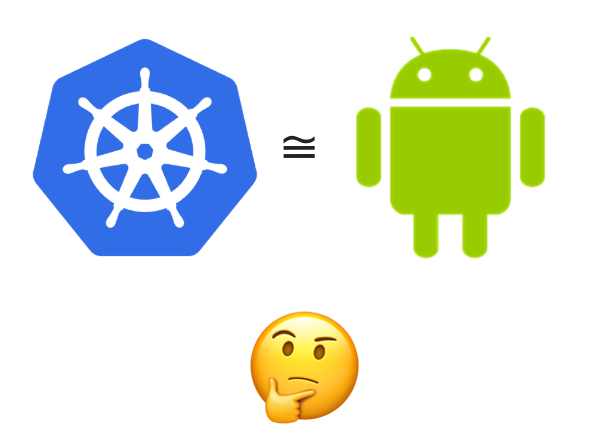
Hmm..An Open Source operating system for a new market. Haven’t I seen this before?
The Story of Android and How it Relates to the Cloud
I really can’t tell this story better than Dieter Bohn did in the piece I linked above, and in this video embedded below. So take a minute to watch it (actually it’s about 10 minutes). https://medium.com/media/549fc58dcc086c7b80b0eb921c52c7c6/href …
That’s a deep rabbit hole, so welcome back to talking about the cloud and how it relates to Android.
Basically this Open Source OS playbook Google ran with Android, is the same playbook they are running for cloud with different actors. Instead of worrying about Microsoft, and windows phones Google this time is worried about Amazon and AWS. This time they are open sourcing the tools needed to run a cloud platform, and they are doing it because Google is on track to build the worlds most sophisticated cloud platform. (Amazon AWS is still by far the biggest and Microsoft’s Azure is growing the fastest).
This makes sense. Profiting off open standards is what Google has built two empires on (Search and Android). Listen to VP of Infrastructure and founder of the CAP Theorem Eric Brewer talk about Kubernetes.
We want to make workloads more mobile — that it’s to our advantage if you use open-source things that can run on-prem in other clouds and on Google, because now we’re competing on operations, on cost, on technology. And that’s the battle we wanted to compete in.
So open-source inevitably allows a couple of things that are helpful to us. But the most important one in my mind, besides community, is that you can move workloads more easily to Google Cloud Platform over time.
— Eric Brewer — VP of Infrastructure
This a a bold claim for a new empire, and probably a scenario some of us fear. Google wants to capture all of the the word’s most complicated and important cloud computing workloads. Think about that for a second.
Is this open source OS playbook working for Google in the cloud? Let’s dig deeper on that.
How the Cloud is Different than Android
Obviously the cloud market is quite different than smart phone market but it’s hard to say how different. A few things that played out in the smartphone market thus far seem quite different in the cloud. First of all cloud computing is basically an enterprise only market. There is no real market for direct sale of cloud computing to consumers in 2018.
One very noticeable difference here is how the marketing spend differs. Instead of flashy ad campaigns you get Developer Advocates and the Chain Smokers concert at your annual conference.

Chain Smokers @ Cloud Next 2018 (shot on Pixel XL)
When you look at the spend by Google it’s hard not to have a bit of cynicism about all the hype. Don’t get me wrong, these tools are going to be great for developers but they are iterations of age old concepts really and not the only Open Source options out there. Also, I think the Android example can be held up as a generally positive market force for developers and hardware manufacturers globally.
But it’s worth asking is Kubernetes realistically having an impact on workload portability? Certainly for many reasons enterprise companies are much stickier with cloud providers than consumers are with phone OS providers. While consumers are upgrading their phone hardware every 2–4 years, enterprises are moving their cloud workloads every 5–10 years (at least that’s the historical trend). So this is a much slower land grab.
Also, Google’s motives seem a little conflicted. Decoded, that quote from Eric reads as “We want to make it easy to move you workloads, but we are going to offer services and reliability on Google that make it hard to move your workloads any where else”. I think that’s probably fine, but actually those sticky services are likely to become the scary AI ones like image and speech recognition which become extremely sticky because of data gravity. (I am not going to get into data gravity; but you should check out this Snowmobile service from Amazon which will give you a sense of the scale of the problem).
That said so far it’s unclear if more portable workloads is quite enough to break free of all the services you might have from your cloud provider. So far it seems like a lot of the Kubernetes progress happening run on the customers existing cloud provider (probably AWS) so they can share services and have access to production data. Also Microsoft recently released Kubernetes 1.11 ahead of Google on their Azure service (this is a little like Samsung launching Android before Pixel line). Of course Android phones in 2012 felt far behind the iPhone 5 of 2012.
Decentralization Advantages
Considering all of that, if you look at the worlds largest enterprise companies it seems seems unlikely the cloud market will evolve as winner-take-all or even a duopoly market like phones (Samsung/Apple) did in the US. It remains to be seen how Google’s lead in AI and data will play out as sticky cloud products for enterprises but advances in these fields have allowed them to make the Pixel camera the best in the smartphone market and voice is a whole other land grab for Google. In reality though voice and camera are still not enough to compete with Samsung or Apple at hardware and it remains unclear what Google’s hardware aspirations are.
Underpinning the global smartphone market is Android and while the US may largely have a duopoly, globally the smart phone market is quite diverse with exciting new companies coming out of China and India. It’s not crazy to think a similar thing will happen with cloud providers on a global scale and it’s fair to expect that Kubernetes will be powering these future cloud providers. I expect the worlds super companies like Softbank, Saudi Aramco, Tencent and Alibaba are all going to offer major cloud offerings (Alibaba already does) at dramatically lower cost than Google and Amazon do today. Additionally the worlds largest banks and governments will advance their private cloud offerings to compete with public clouds at a faster rate going forward.
I look forward to watching Dieter’s Bohn’s future video of Kubernetes at 10 (June 6, 2024).